.png)
EAF Steelmaking: Advancing the Future with Recycled Steel and Circular Sustainability
- EAFab Corporation

- Jul 30
- 4 min read
In the past, the steel industry was well-known for its significant contribution to the American Industrial Revolution, yet infamous for its pollution of urban areas and the risks it posed to its workforce. Traditional steelmaking methods, such as Blast Furnaces and Basic Oxygen Furnaces (BF-BOF), relied heavily on coal and fossil fuels, leading to the steel industry's reputation as a major source of greenhouse gas emissions. These processes were highly energy-consuming and historically hazardous to worker health due to the release of toxic emissions.

The Rise of EAF Steelmaking

The Invention
In 1878, Sir William Siemens developed and patented the first operational model of what is known as the Electric Arc Furnace. Compared to the traditional blast furnace-basic oxygen furnace (BF-BOF) process, which depends on carbon-intensive inputs such as iron ore and coking coal, EAF steelmaking relies mainly on recycled scrap metal. This method utilized the intense heat produced by electric arcs between carbon electrodes to melt steel, as opposed to using a coal-fired furnace. The introduction of this technology offered a cleaner, more concentrated thermal source for metallurgical processing and the production of specialty steel, and supports a closed-loop manufacturing model that strengthens the circular economy.

The Expansion
In 1907, Paul Héroult popularized Electric Arc Furnace technology when he produced and installed the first commercially viable EAF at the Halcomb Steel Company in Syracuse, New York, revolutionizing the future of steelmaking and the industry as a whole. By utilizing recycled scrap steel as input, the Electric Arc Furnace reduces its dependence on mining operations and raw materials, which significantly lowers carbon emissions. Since scrap steel melts at a lower temperature than iron ore, the process consumes less energy, resulting in additional environmental benefits.
Today, electric arc furnace technology is widely recognized as one of the most reliable, flexible, and sustainable methods of steel production. With lower enivornmental emissions and reduced reliance on raw material, EAF steelmaking is helping shape a cleaner and more resilient future for the steel industry.
EAFab Founded on Electric Arc Furnace Steelmaking
EAFab Corporation was founded and established based on Electric Arc Steelmaking principles, with the company name derived from "EAF Fabrication." So not only do we believe that the future of steel production relies on adopting technologies that balance performance with environmental responsibility, we are also committed to continuously innovating these technologies.
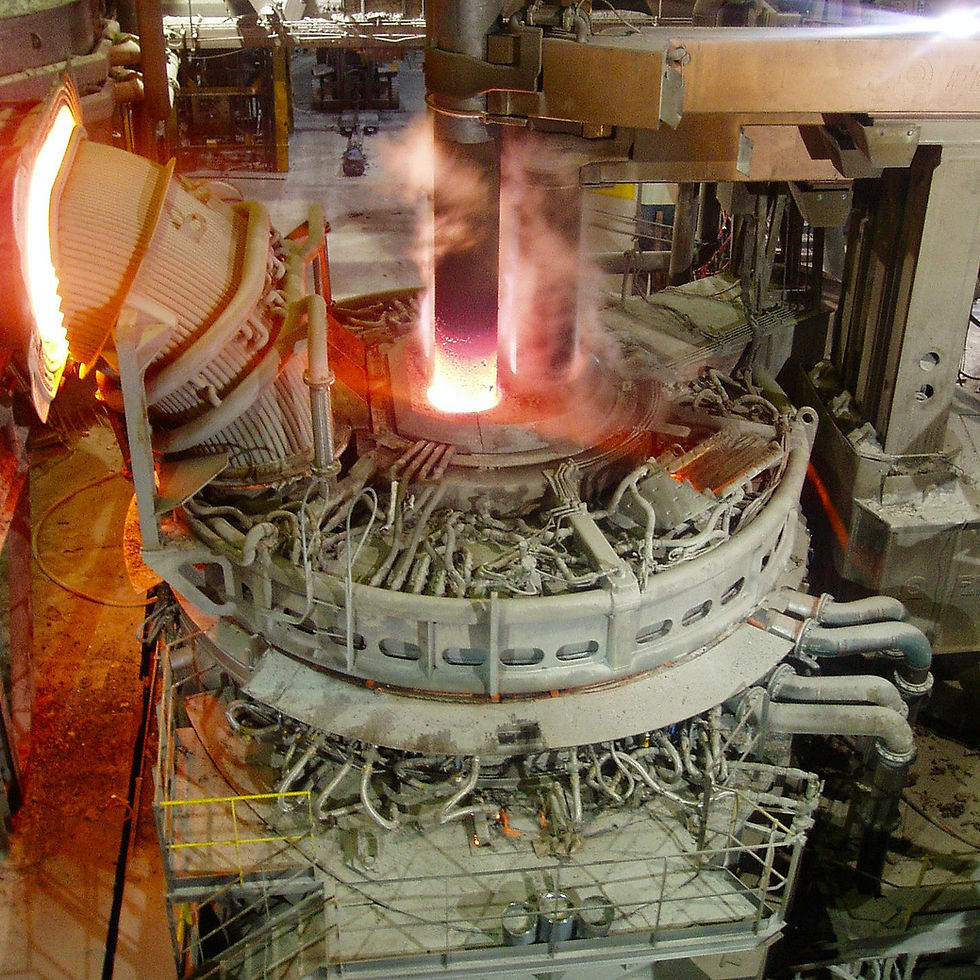
Beyond its environmental advantages, EAF technology promotes a more sustainable, long-term, and efficient steel industry. Electric Arc Furnace (EAF) steelmaking converts recycled scrap metal into new steel using significantly fewer raw materials, supporting a circular economy while reducing waste, conserving natural resources, and lowering carbon emissions.
Steel is the Most Recycled Material Globally
Recyclability is one of steel's greatest advantages and a key reason it remains essential to modern manufacturing. Unlike many materials that degrade after repeated use, steel can be recycled inifinitely without losing its strength, durability, or mechanical properties. This unique characteristic allows steel to remain in circulation for generations.
In North America alone, up to 80 million tons of steel are recycled each year. Through scrap metal recycling, valuable materials are recovered and returned to the manufacturing process, reducing the need for virgin raw materials and supporting more efficient use of resources.
Circular Sustainability in the Steel Industry
The importance of recyclability extends far beyond waste reduction. Recycling steel decreases the need for extracting and processing raw materials such as iron ore and coal, activities that require significant energy and contribute to greenhouse gas emissions. By recovering steel scrap and reusing it as input to the furnace, steel mills can conserve their resources and reduce the environmental impact of production.
Steel's Lifecycle
The same steel that is produced in steel mills will take on new forms, being repurposed into a variety of structures that form the backbone of America’s infrastructure. For example, the steel might be crafted into the bridges that link our communities, or it could become the car you use to drive over those bridges. It might even find its way into your home as a household appliance, such as a refrigerator.

The lifecycle of steel does not end with its transformation into our everyday products. Often, it returns to manufacturers like EAFab, who will use that steel to design and build new equipment. This equipment is then used in the meltshops of steel mills, where the steel is melted and reshaped again, creating a sustainable supply chain loop.
This cyclical nature of steel production and recycling underscores the material's importance in both industrial applications and sustainable practices. Thus, the journey of steel from the mill to its various uses and back again exemplifies circular sustainability.
Circular Economy
As industries around the world work toward sustainability and decarbonization goals, steel recycling has become a critical component of building a circular economy. Every ton of recycled steel returned to the production cycle helps reduce landfill waste, minimize resource depletion, and support more responsible manufacturing practices. By transforming today's scrap into tomorrow's strength, EAFab and the steel industry around us are helping create a cleaner, more circular future for steel manufacturing.
The Future of EAF Steelmaking
Steel produced in an electric arc furnace (EAF) is made primarily from recycled scrap and delivers the same performance and quality as steel manufactured from newly extracted materials, but with a significantly lower environmental footprint.
As demand for clean steel and low-carbon manufacturing continues to grow, EAF technology offers a practical and proven pathway toward a more sustainable industry. Our commitment to EAF steelmaking reflects our belief that sustainability should extend throughout the entire manufacturing process. Through supporting a circular supply chain, EAFab contributes to reducing waste, conserving natural resources, and lowering the industry's carbon footprint. Proudly operating in North America, EAFab delivers reliable, high-performance steel solutions while continuously working to improve operational efficiency and contribute to a net-zero future.
At EAFab, sustainability is at the core of everything we do. By utilizing recycled scrap steel and advanced Electric Arc Furnace (EAF) technology, we help transform existing resources into the high-quality steel products that build tomorrow’s infrastructure, communities, and innovations.


Comments