 Portal
Aluminum Industry
Aluminum is one of the world's most widely used engineering materials, valued for its strength-to-weight ratio, corrosion resistance, conductivity, and recyclability. From transportation and construction to packaging, aerospace, and renewable energy, aluminum plays a vital role in modern manufacturing and global infrastructure.
From Bauxite to Aluminum Metal
Bauxite Mining
Bauxite Grinding
Producing Sodium Aluminate
Settling
Precipitation
Calcination
Smelting
Final Touches
Aluminum production begins with bauxite, the primary ore used to manufacture alumina (aluminum oxide). During the Bayer Process, bauxite is mined, crushed, and ground before being refined through a series of chemical steps, including the production of sodium aluminate, settling, precipitation, and calcination, to separate alumina from impurities and prepare it for smelting.
Alumina is converted into aluminum metal through the Hall-Héroult smelting process, where an electric current separates aluminum from oxygen in a high-temperature electrolytic cell. After smelting, aluminum is cast and further processed through rolling, extrusion, forging, machining, or other finishing operations to produce products used across a wide range of industries.
Industry in Action
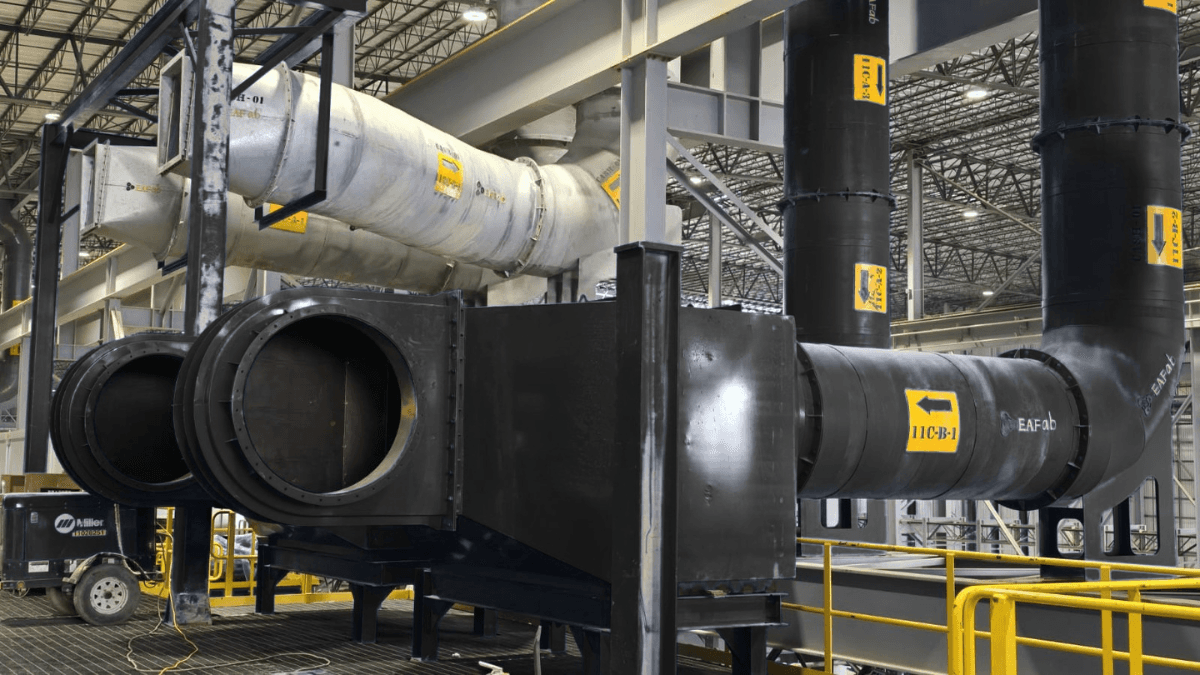
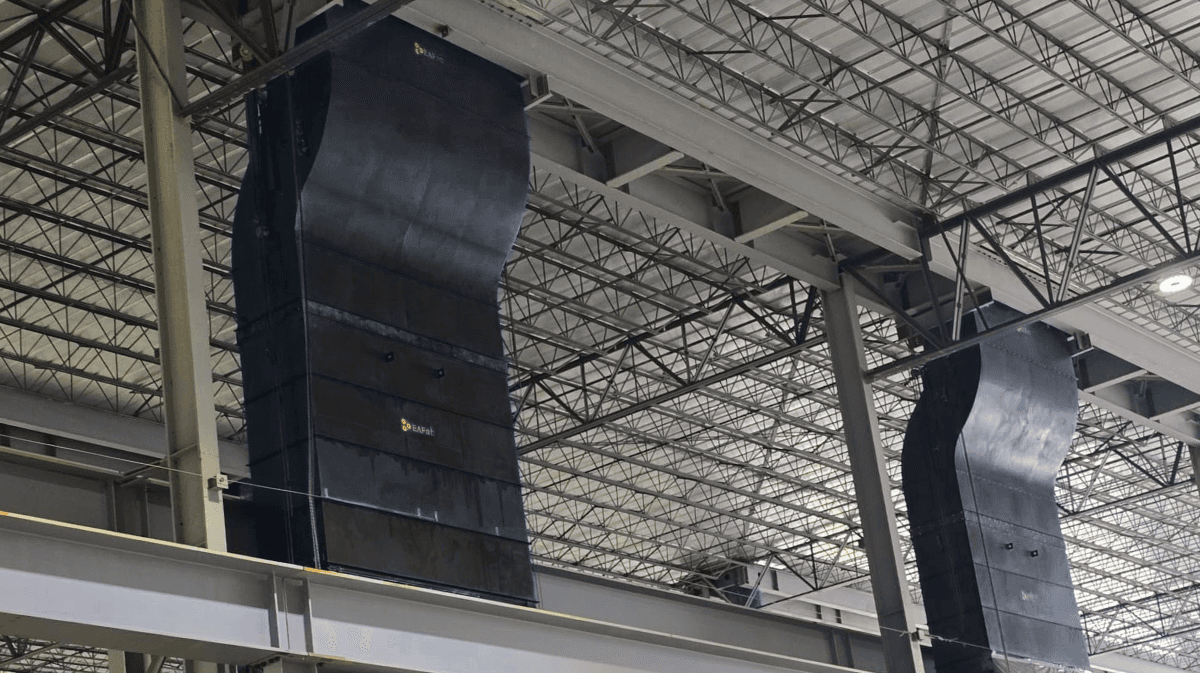
EAFab is Committed to a Greener Future
Aluminum is fully recyclable, and when produced from scrap, it consumes only a fraction of the energy needed to manufacture primary aluminum from bauxite, making it far more energy-efficient than most other metals.
Engineering and Fabrication for Aluminum Processing
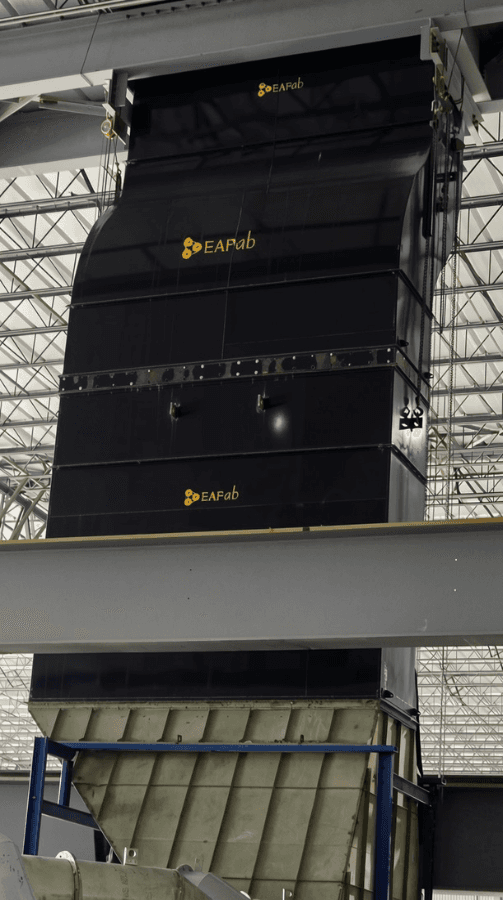
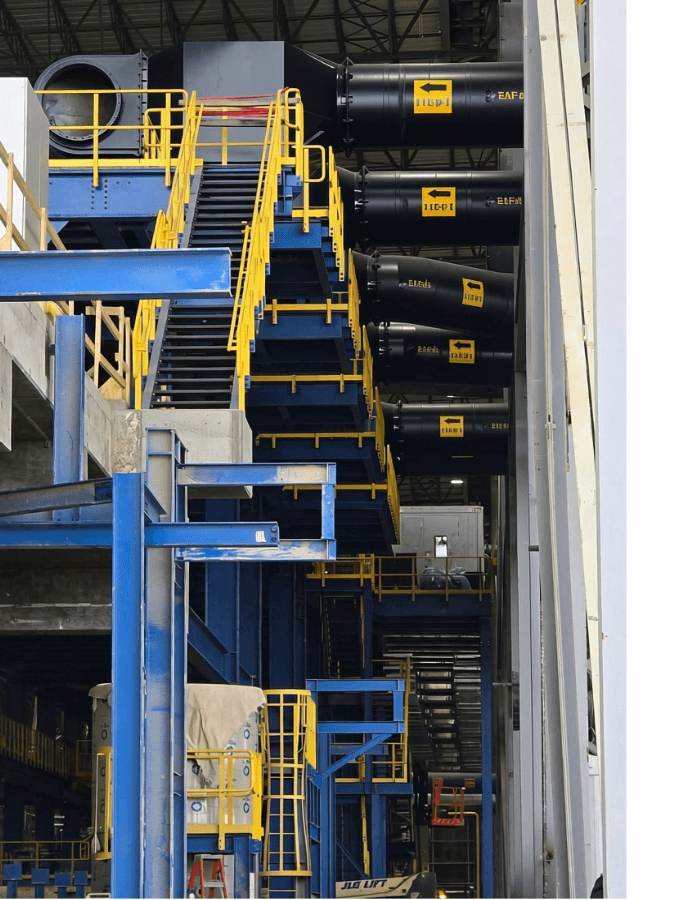
Our team supports aluminum producers with aluminum exhaust stacks and related equipment that improve off-gas handling, optimize cooling performance, extend equipment life, and support reliable operation throughout the aluminum production process.
Have an aluminum processing project?
Share your specs — count on EAFab to engineer and fabricate off-gas equipment built for reliability and REAL solutions.